
Concrete Demolition and Removal
Concrete demolition is the first half of a replacement, and it is the half that decides how the second half turns out. Breaking a slab apart is the easy part. Almost anyone with a breaker and an afternoon can put cracks in old concrete. The work is getting it out of the yard without wrecking the things that are staying: the lawn, the sprinkler lines, the siding on the house, and the run of concrete that was never part of the job.
What gets left behind matters just as much. A removal done in a hurry leaves ruts, buried chunks, and ground that has been churned into something soft. Then the new slab gets poured on top of that. Every shortcut taken during the tear-out shows up later in the concrete that replaced it, and by then it is buried and nobody can point at it.
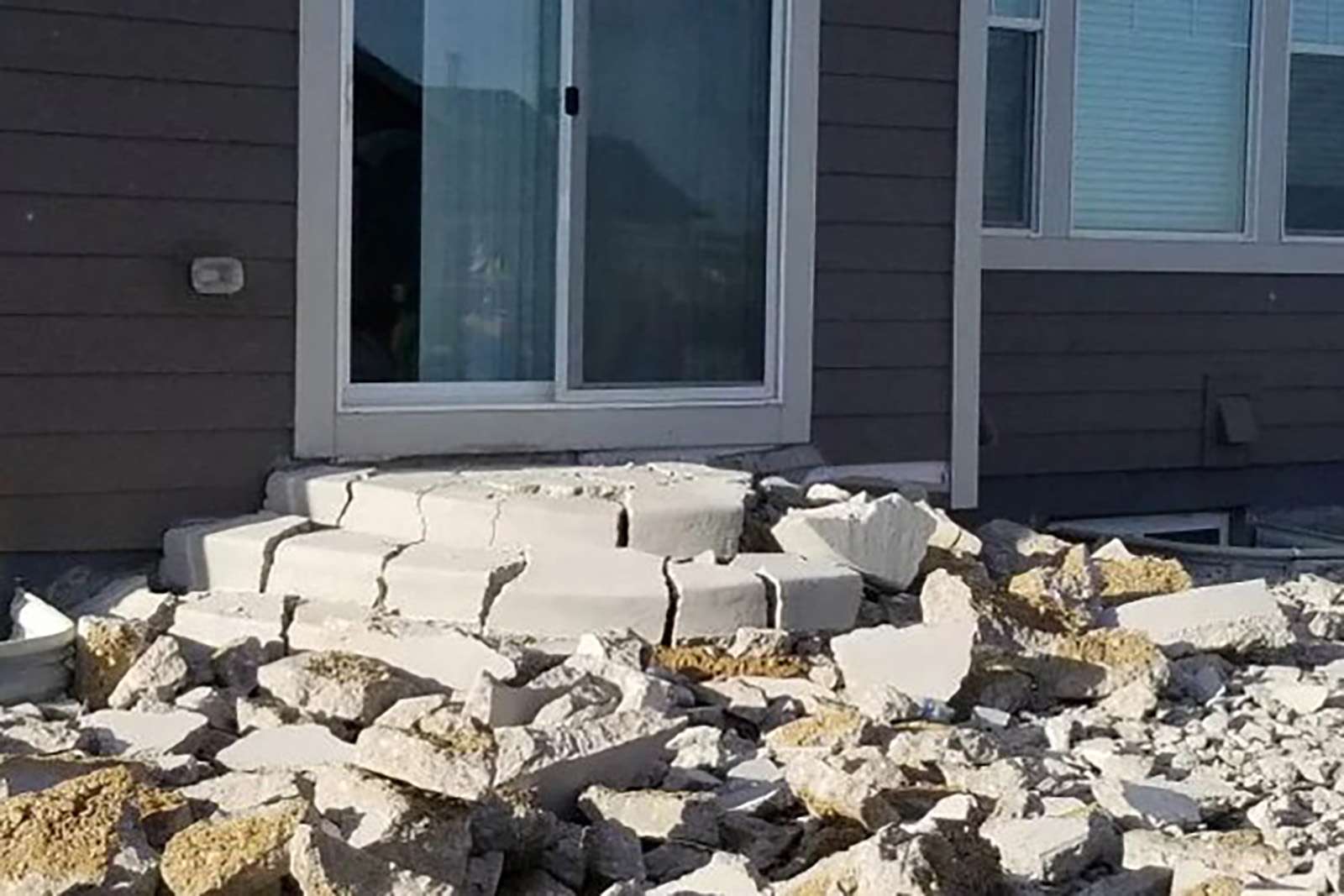
What a Concrete Demolition project includes
A concrete demolition project comes down to five questions: what comes out, how much of it comes out, what gets protected while it does, where the debris goes, and what shape the ground is in when the crew leaves.
- What we take out. Driveways and driveway aprons, sidewalks and walkways, patios, steps and landings, garage and shed slabs, and old pads left behind by an outbuilding that is already gone. Residential flatwork and slabs are the whole list. We do not take down structures or buildings.
- The whole slab, or one section of it. Sometimes the entire pour has to go, because the failure runs through all of it, or because the replacement is changing shape, size, or grade. Other times only one portion has broken up, and the rest is sound and still sitting level. In that case, we saw cut a straight line, take out the failed portion, and leave a clean full-depth edge for the new concrete to meet. Which of the two applies is a walk-around question, not a guess, and it gets answered with you standing there.
- Protecting what stays. Sprinkler heads, valve boxes, and irrigation runs get located and flagged before anything moves. Landscaping, beds, and mature plantings get boarded or worked around. Siding, garage door trim, and foundation walls get shielded wherever a machine has to work close to the house. Concrete that is staying gets a saw cut rather than a hammer, so the break stops where we drew the line instead of running into it.
- Hauling and disposal. Broken concrete gets loaded and taken off the property. It does not sit in a heap on the lawn waiting on a second trip, and it does not get buried in the excavation to save a load. Keeping the material clean on the way out is part of the work, because a load mixed with sod and dirt is a load that cannot be crushed and reused.
- What you are left with. On a replacement, the area comes back cleaned of loose material, brought to grade, and compacted, ready for forms. On a removal with nothing going back, it comes back graded to shed water away from the house and ready for topsoil, sod, or beds.
What sits outside a standard removal is worth naming too. We are not a structure demolition outfit; we do not take out foundation walls holding a building up, and we do not haul off material that was not concrete to begin with. Removal here means flatwork and slabs.
What a Concrete Demolition project includes
Removal pricing turns on 3 things: how much concrete there is, what is inside it, and how hard it is to reach.
ECB publishes no prices, and there is a reason beyond coyness. Two slabs of identical square footage can be hours apart in labor once you know what is buried in them and where they sit relative to a gate. What we can show you instead are the levers. Every driver below either adds hours, adds loads, or adds equipment, and most of them are visible from the driveway before anyone writes a number down.
| What Drives the Number | Why It Moves | What We Do About It |
| Square footage and slab thickness | More concrete is more breaking, more loading, and more weight leaving the property. A thin walkway and a heavy garage slab covering the same footprint are not the same job. | We measure the area and probe an exposed edge for actual thickness rather than assuming it from the type of slab. |
| Wire mesh or rebar inside the slab | Reinforced concrete does not fall apart when it breaks. It stays hooked together in a mat, and the steel has to be cut or worked free before anything can be lifted out. | We read the broken edges and any open joint first, so reinforcement shows up in the estimate rather than as a surprise mid job. |
| How close equipment can get | A machine that can reach the slab does in an hour what hand work does in a day. Gates, fences, retaining walls, meters, and tree trunks all narrow the path in. | We measure the tightest pinch point on the walk-through and size the machine to fit it. |
| Concrete that has to come out by hand | Some backyard patios and slabs behind a closed side yard cannot be reached by anything with tracks. Then it is wheelbarrows from the slab to the truck. | We say so up front, because hand carry is the single biggest swing on an otherwise small job. |
| Total volume going out | Disposal is charged by weight and by the load, so area and thickness compound each other here rather than adding. | We stage the breaking so trucks leave full instead of half loaded. |
| How much protection the surroundings need | Irrigation systems, finished landscaping, and a section of slab that is staying all take time to shield before the first piece gets broken. | We price protection as part of the work rather than treating your lawn as acceptable collateral. |
One more thing worth knowing: a concrete demolition estimate reads cleanest when it sits next to the new pour it feeds, because the same access constraints price both. When a replacement is part of the plan, we quote the two together.
How we run a concrete demolition project
Every concrete demolition job runs in the same order, and a step skipped early gets paid for later.
- Walk the area and mark what stays. Cut lines go on the slab itself in chalk or paint, so nobody has to interpret a description. Sprinkler heads, valve boxes, downspout drains, low fencing, and anything a machine could clip get flagged at the same time.
- Get the underground utilities located. Nothing breaks ground on our jobs until buried lines have been marked. Gas, electric, irrigation mains, and low voltage runs sit shallower than most people expect, and a driveway tear-out is exactly the kind of work that finds them.
- Saw cut the line. Where a section is leaving and the rest is staying, the slab gets cut full depth first. The saw gives the new concrete a square face to meet, and it stops the breaking from running past the line into concrete you are keeping.
- Break the slab. A hydraulic breaker works the concrete down into pieces sized for the machine and for the path out. Reinforced slabs get their steel cut as they come apart rather than dragged across the yard in one hooked-together mat.
- Load and haul. Pieces move from the ground into the truck and the truck leaves. Clean concrete is recyclable material, so it goes to be crushed and reused as base rock and fill rather than treated as trash.
- Grade what is left. The exposed ground gets cleared of loose chunks, brought back to grade, and compacted. This is the step that quietly decides how the next slab behaves, and it is the first step a rushed removal skips, because nobody photographs it and nobody sees it once concrete is on top.
- Hand off, or finish. If a new pour is coming, the area goes straight to forming while the base is still tight. If nothing is going back, the ground gets graded to drain away from the house and left ready for topsoil.
We put “High-Quality Craftsmanship” on the front of our site, and on a tear-out it lives entirely in the parts nobody takes a picture of: the sprinkler head still working when the trucks pull out, the siding unmarked, the edge of the remaining slab clean, and ground flat enough to build on.
Where we work
We take concrete out in every community we serve: Fort Collins, Laporte, Wellington, Timnath, Windsor, Loveland, Berthoud, Greeley, Evans, Johnstown, Milliken, Mead, Longmont, Frederick, Erie, Boulder, Broomfield, Thornton, Brighton, and Commerce City.
Distance matters more on removal than on almost anything else we do, because the trucks make round trips and the haul is a real line on the estimate rather than a rounding error. Knowing exactly how far we go is part of how that number stays honest.
Access is the other reason to have someone look before anything gets scheduled. A concrete demolition job that looks straightforward from the street turns into hand work the moment a gate is too narrow for a machine, and that is not a call anyone can make from a photo or a phone call. We would rather walk it, measure the pinch points, and tell you what is actually involved than quote optimistically and renegotiate in your backyard.
If you have concrete that needs to come out, whether or not a new slab is going back in its place, we will come look at it and put an estimate together at no cost. Tell us what is there and what you want the space to be when it is done.
Get a Professional Free Estimate
Estimates are free, and so is the walk-through that produces one.
Call ECB Concrete LLC at (970) 880-3330 or email ecbconcrete@gmail.com. Tell us what is coming out, roughly how big it is, and whether anything is going back in its place. If you have not decided that part yet, that is normal, and it is an easier decision to make with someone standing on the slab with you.
The rest of what we build is on our concrete services page, including the new flatwork that most concrete demolition work leads into.
Frequently Asked Questions
Does the whole slab have to come out, or just the section that failed?
It depends on how the damage is distributed and on what is going back. If one area has broken up and the rest is level, sound, and sitting on ground that has not moved, we saw cut the failed portion out and leave the rest in place. If the movement runs through the whole pour, or joints are stepping in several places, or the replacement is changing shape, size, or grade, the whole thing comes out. That call gets made on the walk-through, not from a photo. Taking out less than needs to come out is the more expensive mistake, because the piece you left has to be removed again later.
What happens to the old concrete after it leaves my property?
It gets loaded and hauled off rather than stockpiled in the yard, and it goes to be crushed. Clean concrete is recyclable material, and once crushed it gets reused as road base and structural fill. That is why we keep the load clean on the way out: sod, dirt, and mixed debris make a load harder to recycle. Nothing gets buried in the open excavation on your property to save a trip.
Can a driveway come out without tearing up the lawn and the sprinkler system?
Usually yes, and it is a planning question rather than a luck question. Sprinkler heads and valve boxes get located and flagged before anything moves. The machine gets one defined path in and out, so tracking is confined to a single line instead of spread across the yard, and mats or plywood go down where the ground is soft. Irrigation lines running underneath the slab itself are the exception. If a line crosses concrete that is being broken, it has to be dealt with, and we would much rather find it on the walk-through than with a breaker. Anything staying, including the apron at the street, gets a saw cut so the break stops where we want it to.
Do I have to pour new concrete right away, or can the area stay open?
The area can stay open as long as you want it to. Plenty of removals end there deliberately, where a homeowner wants a slab gone and the space turned back into lawn or beds. When a new pour is coming, though, there is a practical reason to keep the gap short. Exposed ground takes on water, gets walked on, and softens, and it may have to be reworked before forms go down. If the timing has to stretch, say so at the estimate and we will leave the ground graded to shed water rather than hold it.
How long does removal take compared with the new pour?
Removal is normally the shorter half. Breaking, loading, hauling, and grading are compressed work next to forming, pouring, finishing, and then leaving the new concrete alone while it gains strength. The exception is a slab that has to come out by hand, or one where no machine can reach it. Those flip the ratio, and the tear-out can run longer than the pour that follows it.