Concrete Contractor in Fort Collins, CO
ECB Concrete LLC is a family owned, father and son residential concrete contractor pouring flatwork for homeowners across Fort Collins and the rest of Northern Colorado. Driveways and sidewalks, patios, stamped and colored work, garage and basement floors, curb and gutter, shop and pole barn floors. The estimate is free, and it starts with one of us standing on your property looking at the actual job.
Two things make Fort Collins hard on concrete, and neither one shows on the day the slab is finished. The first is temperature. The NOAA 1991 to 2020 normals for the Fort Collins station record 150 days a year that fall to 32 F or below, but only 15.4 days that never climb back above freezing. Subtract one from the other and roughly 135 days a year cross the freezing point. Water works into the slab and the sub-base, freezes, expands, and does it again the following afternoon.
The second is the ground. The Colorado Geological Survey calls expansive clay the state’s most significant geologic hazard, notes that these clays can expand up to 20% by volume when they take on water, and names cracked driveways, sidewalks and basement floors as the damage they do.
Age finishes the story. The median Fort Collins home was built in 1992, and 30.4% of the city’s housing went up between 1970 and 1989. A large share of Fort Collins is still standing on its original flatwork after three to five decades of that freeze cycle. When a slab of that age fails, what failed is usually underneath it, and the honest answer is a new slab built for the ground it sits on.
Concrete work we do in Fort Collins
Here is the residential concrete we pour in Fort Collins, and the version of each that this city actually asks for.
- Concrete driveways and sidewalks. Break out the failed slab, rebuild the sub-base, then repour. In Old Town that usually means a narrow original drive and a frontage walk that has to suit a historic street.
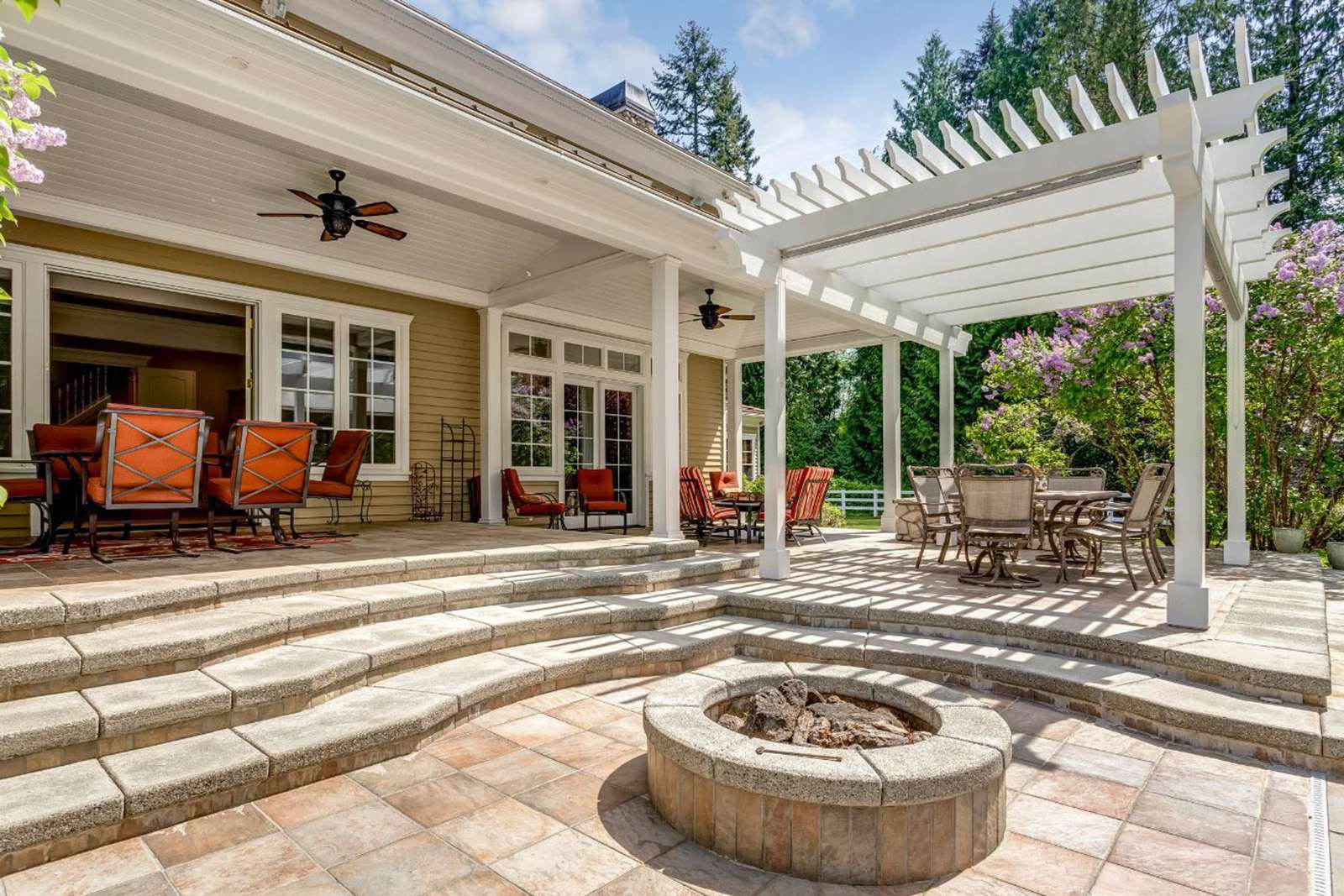
- Concrete patios. Poured slabs at grade, sized to the lot and to how the family actually uses the back of the house.
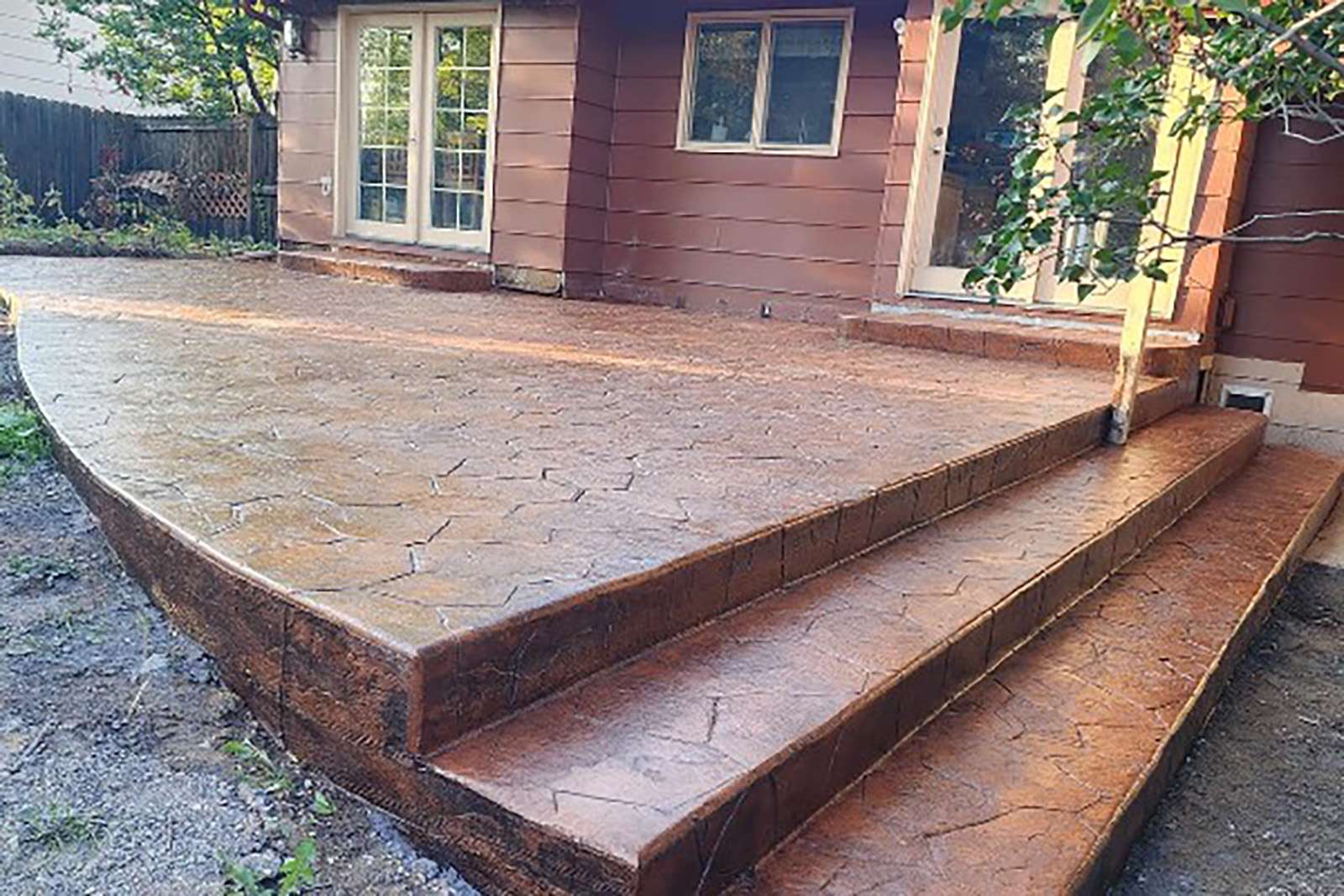
- Stamped concrete. Pattern and texture pressed into the fresh pour. This comes up most along the Harmony Corridor, where the homes are newer and the outdoor space was designed to be looked at.
- Colored concrete. Integral color through the mix, or color worked at the surface, chosen to sit with the house rather than fight it.
- Concrete floors. Garage slabs and basement floors, including the flat, level transition that lets a car roll into the garage without a jolt at the door.
- Pole barn and shop floors. Out on the acreage around Timnath, Windsor and Wellington, the outbuilding floor is often the largest single pour on the property.
- Curb and gutter. The frontage concrete between the property and the street, replaced so it lines up with the drainage the street already has.
- Concrete demolition. Breaking out and hauling off the old slab. A failed Fort Collins driveway is usually a sub-base problem, so the demolition is where the real repair actually starts.
Every one of those is residential work. We pour for homeowners, we are fully licensed and insured, and the concrete is 4000 PSI or better. Tell us which of these you are planning, and we will come out, look at the site, and give you a free estimate.
Fort Collins permits and local details
Fort Collins splits residential concrete permitting down the middle, and the split catches homeowners out, so here is the short version.
On the building side, the City lists sidewalks and driveways under its residential permit exemptions. That is not the same as the work being unregulated. The City’s own wording is that permit exempt does not mean code exempt, and that even without a permit your project still has to follow City codes, laws and ordinances.
On the engineering side, the exemption stops at the property line. Work on a public sidewalk or a driveway approach needs a Sidewalk and Drive Approach Permit, which the City prices at $25 for up to 15 feet and $0.30 for each additional foot. Cutting in the City right-of-way needs an Excavation Permit, with a $45 application fee and a $50 per 1,000 square foot inspection fee. Both require a site plan. And in both cases the City requires the contractor to hold a valid City-issued Right-of-Way Contractor’s License for that category of work.
That last one is worth writing down, because it is a credential a homeowner can actually check. If a bid covers your driveway approach where it meets the street, ask whoever wrote it to show you their right-of-way license.
The rest of the local detail is geography. Old Town holds the oldest flatwork in the city and the tightest access, so a replacement pour there has to work in a narrow footprint and still look right on a historic street. Around Colorado State University and City Park, mature trees over mid-century and 1970s stock give you the familiar pattern: lifted sidewalk panels, a trip hazard at the walk, driveway slabs gone out of level. South along the Harmony Corridor the housing is newer and master-planned, so the conversation there is pattern, color and architectural review rather than tear-out. West Fort Collins, up against the foothills toward Horsetooth Reservoir, is sloped and stepped ground where grading, drainage and control joint layout matter more than finish. Out toward Timnath, Windsor and Wellington the lots get big enough for long private drives and outbuilding floors.
Get a free estimate in Fort Collins
The estimate is free, and there is no charge to have us come look.
Call (970) 880-3330 or send a note through the site with the address and a sentence about what you are thinking, and we will set a time. On that visit we walk the slab with you, look at where the water goes, check what the old concrete is sitting on, and talk through what a rebuild would involve. If the ground under your driveway is the real problem, you will hear it from us, because pouring new concrete over a bad sub-base in a city that crosses freezing about 135 days a year is how a job gets done twice.
ECB Concrete LLC is family owned and father and son operated. We are fully licensed and insured, we pour 4000 PSI concrete or better, and we work across Fort Collins, Loveland, Greeley and the rest of Northern Colorado. Solid foundations, lasting impressions.
Custom Concrete Services
Our Custom Concrete Service covers all of your concrete needs.
We have over 20 years of experience providing all concrete services including:
Concrete Patios
Stamped Concrete
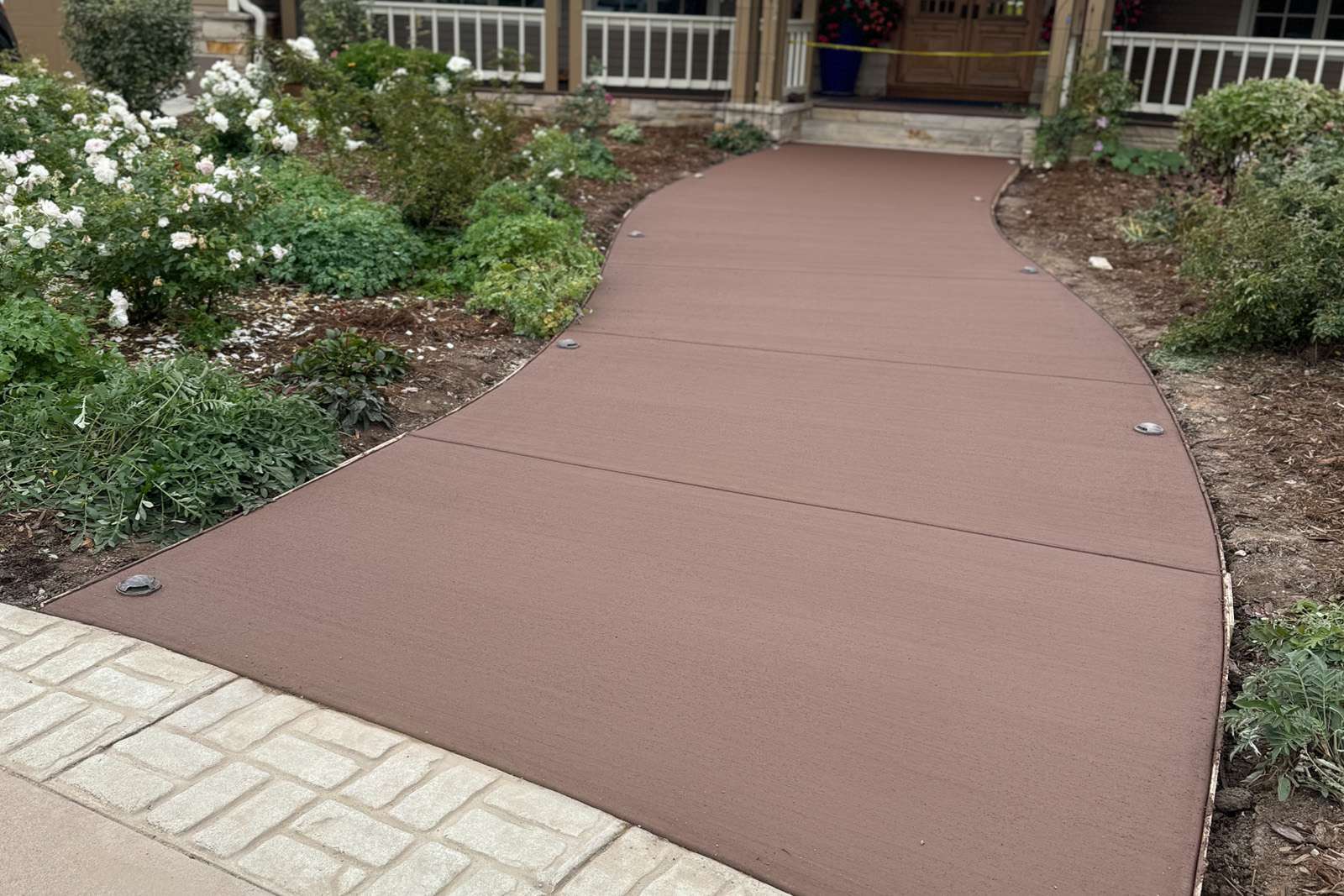
Concrete Driveways & Sidewalks
Other areas we serve
Fort Collins is home, but it is not the whole of where we work. Greeley and Loveland are the other two towns we cover in depth, and the full service area takes in twenty communities: Fort Collins, Laporte, Wellington, Timnath, Windsor, Loveland, Berthoud, Greeley, Evans, Johnstown, Milliken, Mead, Longmont, Frederick, Erie, Boulder, Broomfield, Thornton, Brighton, and Commerce City.
If your address is on that list, the crew, the mix, and the free estimate are the same as they are here.
Frequently Asked Questions
Do I need a permit for a new driveway in Fort Collins?
For the part on your own property, usually not. The City lists sidewalks and driveways under its residential permit exemptions. The moment the work touches the public sidewalk or the driveway approach at the street, that changes: a Sidewalk and Drive Approach Permit is required, a site plan comes with it, and the contractor has to hold a City-issued Right-of-Way Contractor’s License for that work. Permit exempt also does not mean code exempt, so the pour has to meet City code either way.
Why does concrete crack and heave so much in Fort Collins?
Freeze cycles on top, clay underneath. Fort Collins crosses the freezing point roughly 135 days a year, and water that has worked into the slab or the sub-base freezes, expands, and repeats the next afternoon. Below that, the Colorado Geological Survey identifies expansive clay as the state’s most significant geologic hazard, and it swells as it takes on water. A slab poured thin, on a sub-base that was never properly prepared, or without a sensible joint layout has no answer to either one.
Why are the quotes I am getting so far apart?
Because they are not describing the same slab. Thickness, the mix, how much of the old sub-base gets rebuilt, whether there is reinforcement, how the control joints are laid out, and where the water is sent all move the number, and none of them are visible once the concrete is down. When you compare bids in Fort Collins, compare those six items rather than the total at the bottom of the page.
We are in a newer neighborhood along the Harmony Corridor. Do we need approval for a stamped patio?
Assume yes, and get it settled before anyone orders concrete. The newer subdivisions along the Harmony Corridor are master-planned communities, and architectural review on color, pattern and finish is a normal part of life in that kind of neighborhood. Getting the pattern and color approved on paper first costs nothing. Changing a slab after it is poured costs a great deal.
When is the best time of year to pour concrete in Fort Collins?
Spring through fall is the straightforward window. Concrete can be placed in colder weather with the right mix and the right protection, but the Fort Collins January normals are a 45.0 F high against an 18.3 F low, and a daily swing of nearly 27 degrees in the coldest month is exactly what green concrete does not want. If you are planning a driveway replacement, raising it early gives you more say in the date.