Concrete Contractor in Johnstown, CO
Pouring a new patio, driveway or on-site walk in Johnstown does not need a Town building permit. Putting a cover, a pergola or stairs over that slab does. The Town of Johnstown publishes both lists, and the line between them sits above the concrete rather than in it.
ECB Concrete LLC is a family owned, father and son residential concrete contractor working across Johnstown and the rest of Northern Colorado. Flatwork is what we do: patios, driveways, walkways, pads, stamped and colored surfaces, garage and shop floors. The estimate is free.
Johnstown is being built, not maintained. The Town issued 528 single-family permits in 2025, and between July 2024 and July 2025 the town was the tenth fastest growing community in the United States among places of 20,000 or more, adding 8.4% to reach a population of 22,433. Put 528 new homes in one year against an existing stock of 7,124 units and the shape of the local job changes. Most of what gets poured here is added to a property rather than pulled out of it.
The replacement side is real and it has a date on it. 44.7% of the town’s housing units went up between 1990 and 2009, which puts them at 17 to 36 years old. That cohort holds the original builder flatwork, and it is the age at which a slab on this ground stops simply looking older and starts moving.
Concrete work we do in Johnstown
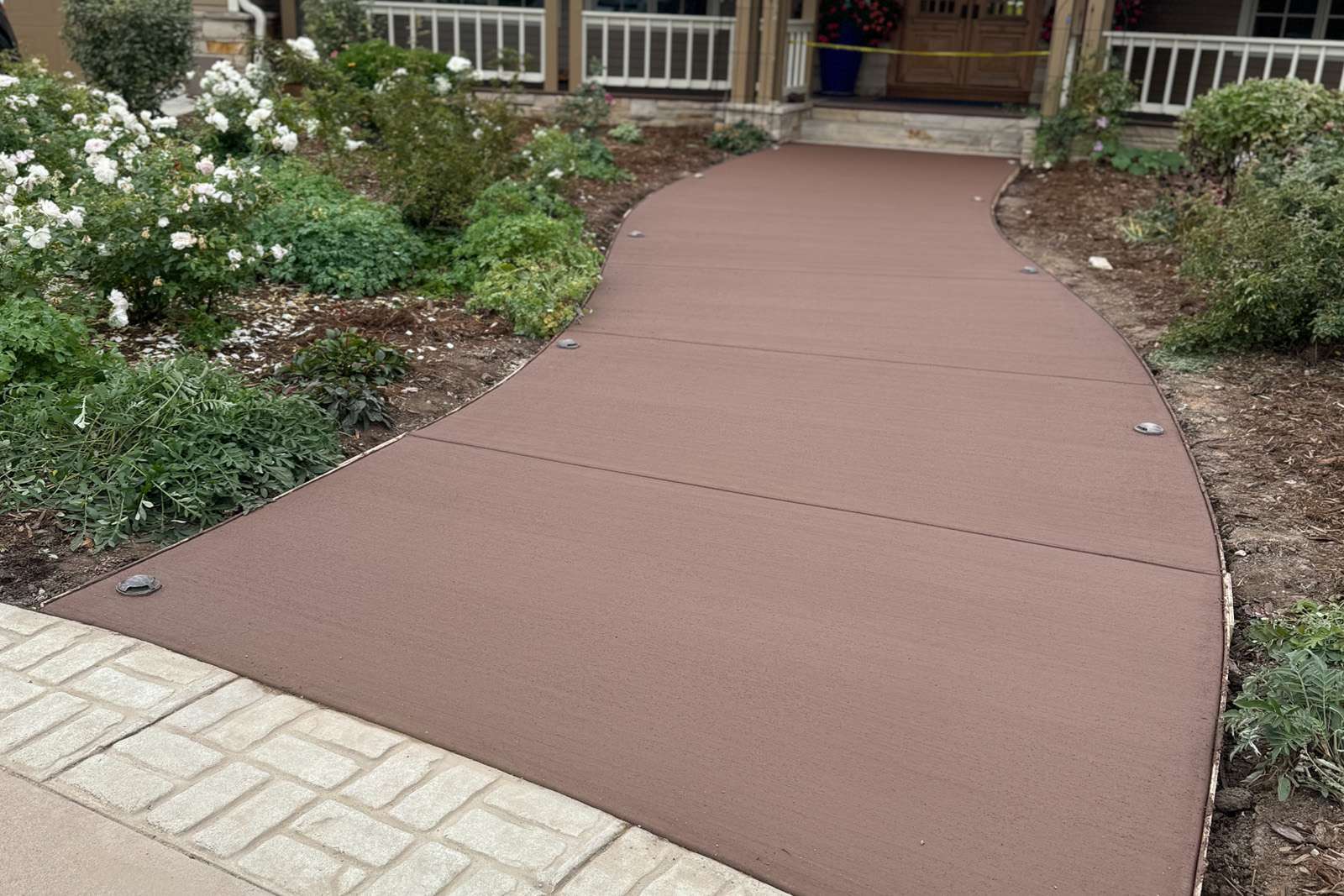
Most homes in town arrived with the same builder slab package: a standard two car driveway, a front walk and a small rectangular slab out back, on a lot handed over as bare dirt. Almost everything below gets added to that.
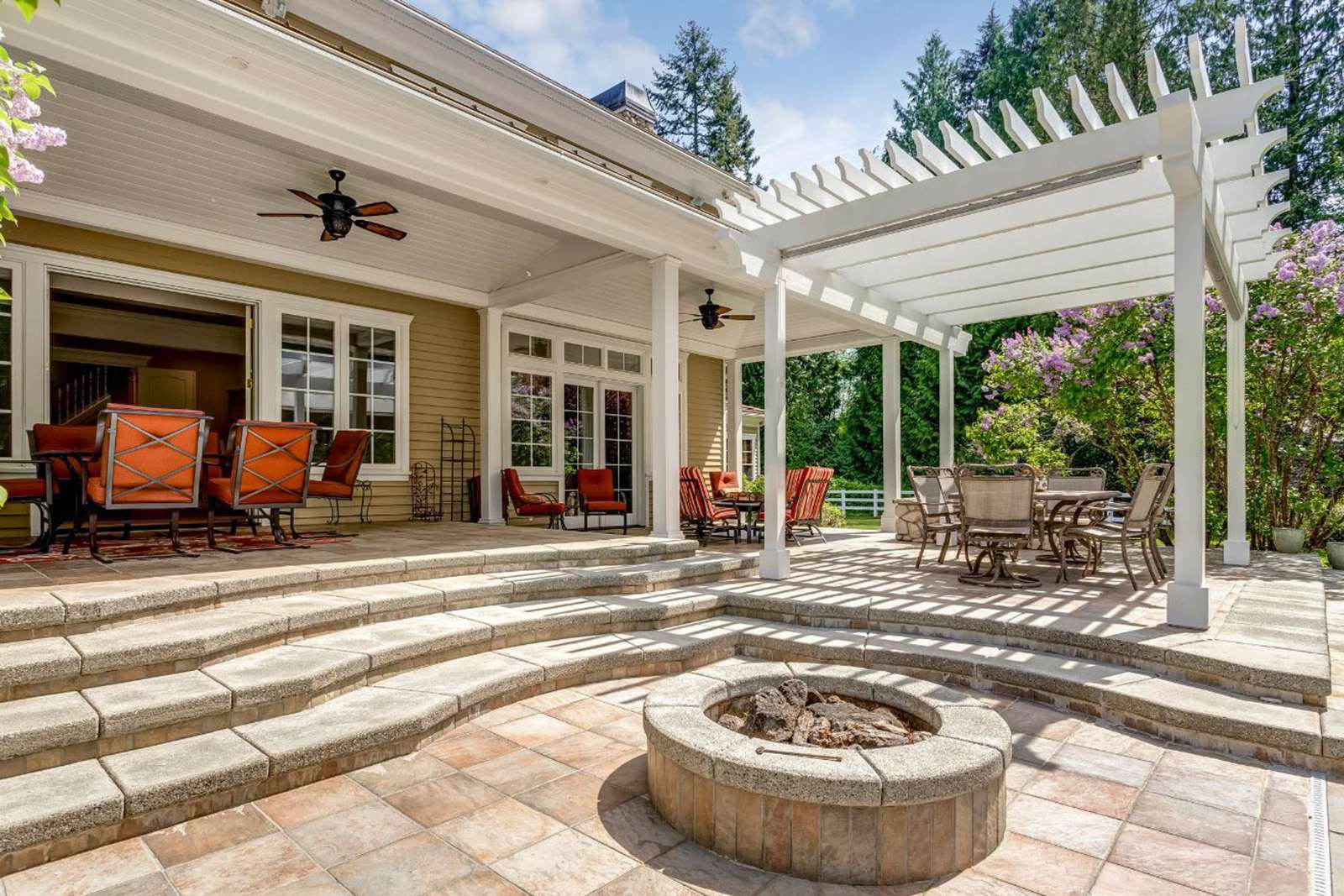
- Back patios, and extensions onto the small slab the builder poured
- Stamped and colored surfaces, including borders and banding
- Walkways from the back door to the yard, and side yard access strips
- Shed pads, hot tub pads, and RV or trailer pads
- Driveway widening, driveway extensions and extra apron area
- Garage, shop and pole barn floors
- Basement floors
- Full slab removal and a fresh pour where the old concrete has moved past saving
With 5,656 of the town’s 7,124 housing units being single family detached, 79.4% of the stock, that list covers most of what a Johnstown address can actually use.
Every mix we place is 4000 PSI concrete or better. On ground that crosses the freezing point somewhere between about 135 and 155 days a year, the mix is the least expensive part of a job to get right and the most expensive to get wrong.
Not sure which of those your property needs? The estimate is free. Call (970) 880-3330.
Johnstown permits and local details
What needs a permit here and what does not
The Town of Johnstown lists pouring a new concrete patio, driveway or on-site walk under the work that does not require a permit, subject to a minimum 3 feet from property lines for required drainage. The same page puts a cover, a pergola or stairs over that slab on the list that does require one, along with retaining walls over 4 feet. The Town also asks you to watch setbacks and easements, typically 5 feet minimum from side and rear, and to check your plat or development plan before anything is staked out.
Two further Town rules are worth knowing while you compare bids. The first is licensing. The Town states that “All contractors must be licensed in the Town of Johnstown,” and it will not issue a homeowner permit for work performed by unlicensed contractors. That is a credential the Building Department can confirm for you, and it is worth confirming on anything that needs a permit. The second is tax. The Johnstown Municipal Code requires collecting 3.5% Use Tax on all construction materials when a building permit is issued, so a covered structure carries a line item that a bare slab does not.
Plan review and inspections for the Town are contracted to SafeBuilt. Anything inside a FEMA 100-year floodplain also needs a Floodplain Development Permit approved first, which is live here because the town sits just west of the confluence of the Big Thompson River and the Little Thompson River.
What the Town’s own code says about the ground
Johnstown’s adopted design criteria, effective 1 January 2026, set a frost line of 30 inches, an Air Freezing Index of 1000, a ground snow load of 30 psf and a weathering classification of Severe. Severe is the most demanding of the three categories the residential code uses, and it is the one that governs concrete durability and exposure.
Underneath that is clay. A soil survey query across the town’s footprint returns Nunn clay loam as a major component at 42.5 percent clay with a linear extensibility of 7.5, alongside Loveland clay loam at 35 percent clay in the top 38 cm. The Colorado Geological Survey calls expansive soil the state’s most significant geologic hazard and notes these clays can exert a force of up to 30,000 pounds-per-square-foot. Two lots on the same street can sit on different map units, which is why the Town requires a site specific soils analysis behind an engineered foundation.
Between about 135 and 155 days a year, depending on which nearby station you read, a slab here freezes overnight and thaws in the afternoon. Water works into the surface, the joints and the subgrade, freezes, expands, and does it again the next day.
Where the work sits, subdivision by subdivision
Thompson River Ranch is the largest master planned community in town, with homes dating from 2006 to 2022, so the oldest flatwork in it is twenty years old and the newest is four. Pioneer Ridge, in the south near Pioneer Ridge Park, holds the largest houses in the local sample on stock built from 2001 to 2015.
The central belt is where the 1990 to 2009 arithmetic bites hardest. Carlson Farms, Johnstown Farms, Rocksbury Ridge and Clearview were all built between 2000 and 2016, all four carry associations, and none of them has a home older than 26 years. Original driveways and front walks in that belt now sit on clay at the exact age where movement starts to show. Clearview Park and Parish Park are useful markers if you are working out which of them you live in.
Downtown is a different job. The 1902 plat around Parish Avenue runs lots of 25 feet by 140 feet with 20 foot alleys, which means rear alley access, detached garages off the alley, tight pours and new work that has to be pinned properly into old. 300 housing units townwide predate 1940, and this is where they are.
Then there is the build front. Filings at Revere North and The Granary are in review or approved with the Town, which keeps adding households who close on a house with a driveway, a front walk and bare dirt behind it.
Associations, and what happens to the yard
Every named subdivision sourced for this page carries an association, with quoted fees running from $30 per month at Rocksbury Ridge up to $50 to $114 per month plus a $1,320 assessment at Thompson River Ranch. Assume architectural review on color, stamp pattern and finish, and read your own filing, because fee structures and covenants differ between filings inside a single subdivision.
One more local constraint. The Town is under a Level 3 drought watering schedule effective until October 15, 2026, with watering limited to two days a week by address parity, and the Town states that “For those planting new grass or lawns, a permit from the Town is required.” Any pour that disturbs turf runs into that, so a reseeded lawn is not the automatic end of a concrete job in this town.
Get a free estimate in Wellington
The estimate is free. Call ECB Concrete LLC at (970) 880-3330, or email ecbconcrete@gmail.com, and tell us what you are looking at.
We are family owned and father and son operated, based in Fort Collins and pouring residential concrete across Northern Colorado, Johnstown included. Every slab we place is 4000 PSI concrete or better.
Bring us the awkward version of the question. Whether the old slab has to come out or can be built onto, whether the shape you want clears the minimum 3 feet from property lines for required drainage, whether what you are planning falls on the Town’s permit list or off it. Those answers are worth having before anyone starts pricing.
Custom Concrete Services
Our Custom Concrete Service covers all of your concrete needs.
We have over 20 years of experience providing all concrete services including:
Concrete Patios
Other areas we serve
ECB Concrete pours residential concrete across Northern Colorado. From Johnstown, Loveland sits about nine miles northwest and Greeley about ten miles east-northeast, and Fort Collins, where we are based, is roughly 20 road miles to the northwest.
We also serve Milliken, Mead, Berthoud and Windsor, along with the rest of our Northern Colorado service area. Same 4000 PSI concrete or better, same free estimate. Call (970) 880-3330.
Get a Professional Free Estimate
Send us the drive and walk dimensions, a note about what parks on the surface, and a couple of photos showing how the existing concrete has failed. That is usually enough for us to tell you what the scope should be.
Estimates are free. We will walk the site, shoot the grades, and give you a written scope that names slab thickness, base depth, and reinforcement, so you can hold it against anything else you have been quoted.
ECB Concrete LLC (970) 880-3330 ecbconcrete@gmail.com 3717 S Taft Hill Rd #161, Fort Collins, CO 80526
We are fully licensed and insured, and every concrete driveways and sidewalks quote we write is an itemized scope you can read line by line before you decide anything.
Frequently Asked Questions
We want a patio and a cover over it. Which part needs a Johnstown permit?
The slab does not, the cover does. The Town of Johnstown lists pouring a new concrete patio, driveway or on-site walk as work that does not require a permit, as long as it stays a minimum 3 feet from property lines for required drainage and respects your setbacks and easements. Adding a cover, a pergola or stairs is on the permit required list. The practical consequence is worth planning around: if the cover is coming later, the permit, the inspections and the 3.5% Use Tax on all construction materials arrive with the cover, not with the concrete.
Our house is in Carlson Farms and went up in 2005. Is our original concrete due?
It is in the window. 44.7% of the town’s housing units were built between 1990 and 2009, which makes them 17 to 36 years old, and Carlson Farms, Johnstown Farms, Rocksbury Ridge and Clearview all sit inside that range. Age alone does not decide it. What decides it is whether the slab has moved, because movement is a subgrade problem rather than a surface one, and on Nunn clay loam at 42.5 percent clay the honest answer on a moved slab is usually removal and a fresh pour rather than anything cosmetic.
We just closed on a new build in Johnstown and the back yard is bare dirt. What can actually go back there?
A back patio first, most of the time, then a walkway connecting it to the gate or the yard. After that the common additions are a shed pad, a hot tub pad, an RV or trailer pad, and extra apron or driveway width if parking is tight. The Town issued 528 single-family permits in 2025, so a large number of households in this town are looking at the same empty rectangle at the same time.
Our place is off Parish Avenue on a narrow lot with an alley behind it. Is that a different job?
Yes, and it is the harder one. The original 1902 plat runs lots of 25 feet by 140 feet with 20 foot alleys, so access is from the rear, the garage is often detached and reached off the alley, and there is rarely room to swing a truck. New concrete downtown usually has to be pinned into neighboring older work so the two behave as one surface. It is a smaller share of the town, 300 housing units predate 1940, but it is the part of Johnstown where the site, not the slab, sets the price.
How much does the ground under Johnstown actually move?
Enough that the Town wrote it into code. Johnstown’s adopted design criteria set a frost line of 30 inches and a weathering classification of Severe, the most demanding category the residential code uses. Under the town, a soil survey returns Nunn clay loam at 42.5 percent clay with a linear extensibility of 7.5, and the Colorado Geological Survey notes expansive clays can exert a force of up to 30,000 pounds-per-square-foot. Add between about 135 and 155 days a year that cross the freezing point and you have the two forces that decide how long flatwork lasts here.