
Concrete Contractor in Loveland, CO
In Loveland, the curb, gutter and sidewalk in front of your house are yours to look after, not the City’s. Loveland Municipal Code Chapter 12.20 places that responsibility on the property owner, and most people learn it the hard way, usually the year a settled curb starts holding water or a lifted panel turns into a trip hazard.
ECB Concrete LLC is a family owned, father and son residential concrete contractor working across Loveland and Northern Colorado. Driveways and sidewalks, patios, stamped and colored concrete, garage and basement floors, curb and gutter, and pole barn and shop floors. The estimate is free.
The conditions here are hard on flatwork in a specific way. Loveland takes 47.0 inches of snow in an average year, and the recorded extremes run from 106 F in July 2022 to 31 degrees below zero in December 1990. Meltwater works into the surface and the joints, freezes, expands and repeats. Underneath, the Colorado Geological Survey identifies expansive clay as one of the most significant, widespread and least publicised geologic hazards in the state, and that clay swells as it takes on water. Loveland homeowners end up describing the outcome in two words: cracking and heaving.
Age decides which of the two you are dealing with. The median Loveland home was built in 1994, and 60.1% of the city’s housing went up before 2000. Around Lake Loveland that means original flatwork reaching the end of its service life. In the newer parts of town it means the concrete is fine and the real question is whether it is big enough.
Concrete work we do in Loveland
Residential concrete, all of it poured at 4000 PSI or better.
- Curb and gutter. Given what Chapter 12.20 puts on the property owner, this is what Loveland homeowners ask about first. A settled curb is a drainage problem before it becomes anything else.
- Concrete driveways and sidewalks. Tear out and replace, including the approach where the drive meets the street and the frontage walk that runs with it.
- Concrete demolition. Breaking out and hauling off the old slab. On a driveway that has heaved, that is the only way to reach the ground that caused it.
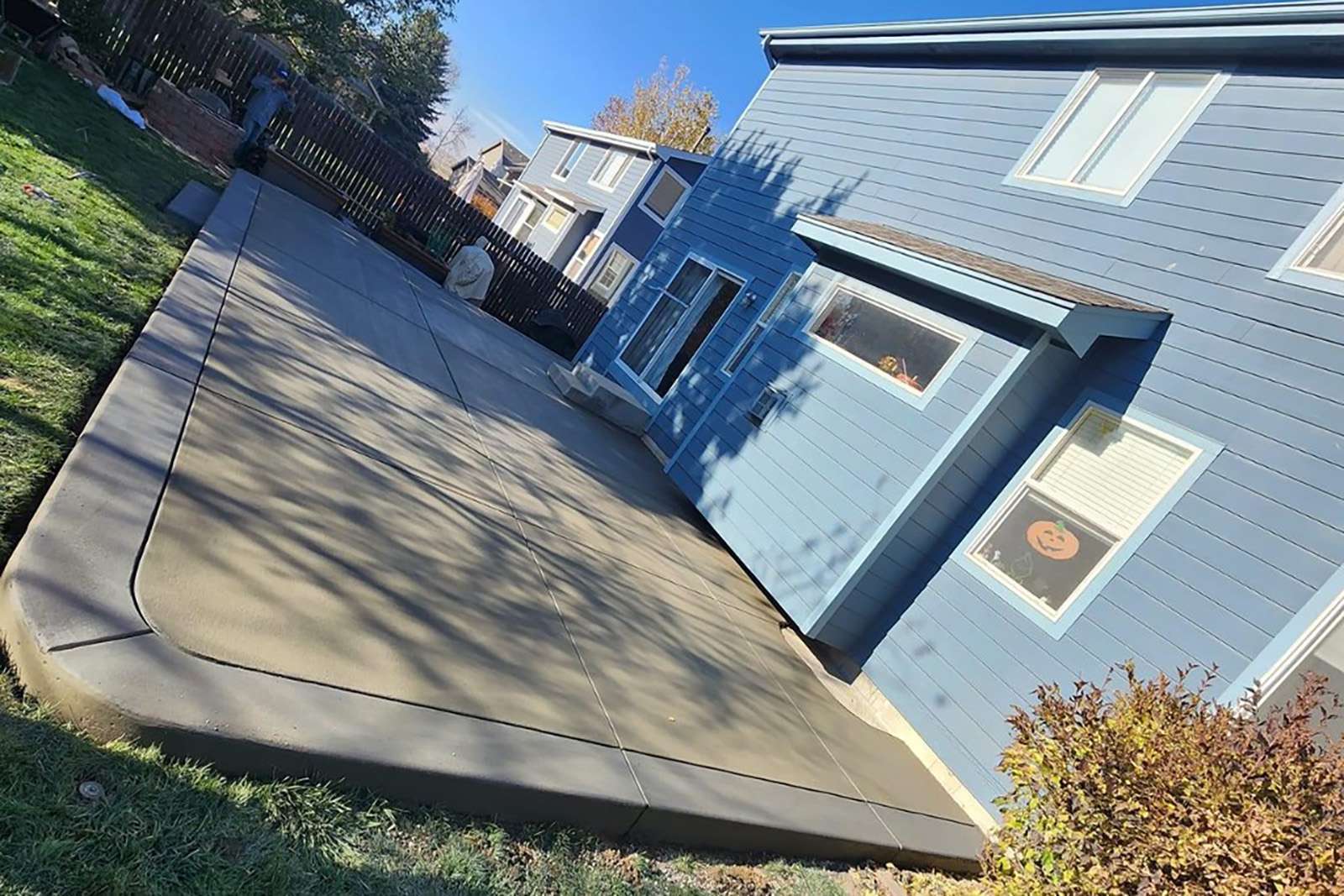
- Concrete patios. New patios, and extensions to the one the builder put in. Out at Mariana Butte the lots and the views carry a larger slab than most homes were given.
- Stamped concrete. Texture and pattern set into the fresh pour, which is the most requested upgrade on the west side of town.
- Colored concrete. Color run through the mix or worked into the surface, kept in step with the house rather than competing with it.
- Concrete floors. Garage and basement slabs, poured level and finished to be lived on.
- Pole barn and shop floors. In the foothills west of town the lots are large, the outbuildings are real buildings, and the floor is a serious pour with a long private driveway usually attached to it.
If drainage belongs on your list, raise it early. A Loveland slab that sends snowmelt toward the house rather than away from it is a slab you will be talking about again in five years. Tell us what you are looking at and we will come out and price it, at no cost to you.
Loveland permits and local details
Concrete work in the Loveland right of way needs a Minor Right-of-Way permit, and the City is specific that this is the concrete permit: driveway approaches and sidewalks. Other work in the right of way falls under a Major ROW permit instead. An application is only accepted complete, which means the signed form, an approved certificate of liability insurance, a copy of the traffic control plan, and a CDOT State Highway Utility or Special Use Permit where one applies. Incomplete packages are not reviewed. Permits are handled by Public Works Transportation Engineering at 2525 W. 1st Street.
The Chapter 12.20 obligation has a companion worth knowing about. The City runs concrete replacement programs, and one of them is a Cost Share for homeowners living at the property, covering curb, gutter and sidewalk. The qualifying test is drainage or safety, meaning something like a tripping hazard or a settled curb and gutter. The City says plainly that appearance alone, such as surface spalling, does not qualify. If you go down that route the City wants a minimum of three estimates before work begins, and City staff inspect the area both before the old concrete comes out and again before the new concrete goes in. We are glad to be one of your three.
Where you live in Loveland shapes the job. North Lake Loveland, on the streets around Lake Loveland and North Lake Park, is mid-century housing on quiet lots, and it holds the highest concentration of flatwork that is genuinely due for replacement. The Overlook and Mariana Butte, west of downtown against the foothills, carry the golf course lots and the wide views, which makes them the strongest fit in the city for stamped and colored work. Centerra, the newer planned development near Interstate 25, is post-2000 housing, so the work there runs to extensions, upgrades and interior slabs rather than tear-out. The Boyd Lake neighborhoods pair newer homes with larger lots, which is where patio expansions and trailer and RV pads come from. Out west toward Devil’s Backbone Open Space you are into the acreage segment: long private driveways, shop floors and outbuilding pads.
One detail comes up on nearly every Loveland job that touches existing concrete. New work tied into old only holds if it is pinned properly, so that the two slabs move together instead of going their own ways. It is worth asking any contractor how they intend to make that connection, because it decides whether the seam survives its first winter.
Get a free estimate in Loveland
Call (970) 880-3330 or send a note through the site with the address and a sentence about what you have in mind. We will set a time, come out, and give you a free estimate.
On that visit we look at three things: the slab, what it is sitting on, and where the water goes when 47 inches of snow melts off it. If the honest answer is that the grade has to change before anything gets poured, that is what you will hear from us, even when it makes the job bigger than you were expecting.
ECB Concrete LLC is family owned and father and son operated, fully licensed and insured, and pours 4000 PSI concrete or better across Loveland, Fort Collins, Greeley and the rest of Northern Colorado. Solid foundations, lasting impressions.
Custom Concrete Services
Our Custom Concrete Service covers all of your concrete needs.
We have over 20 years of experience providing all concrete services including:
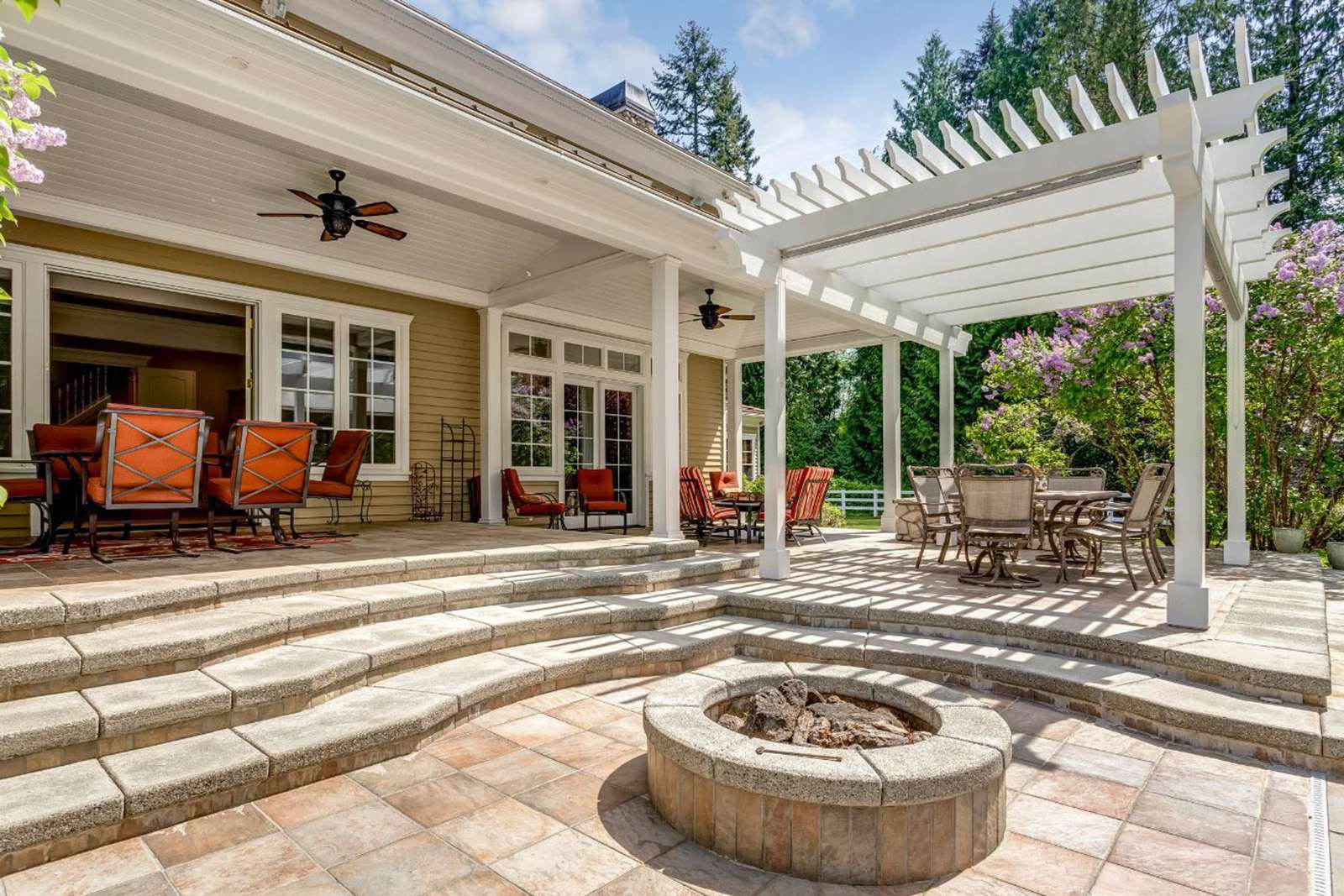
Concrete Patios
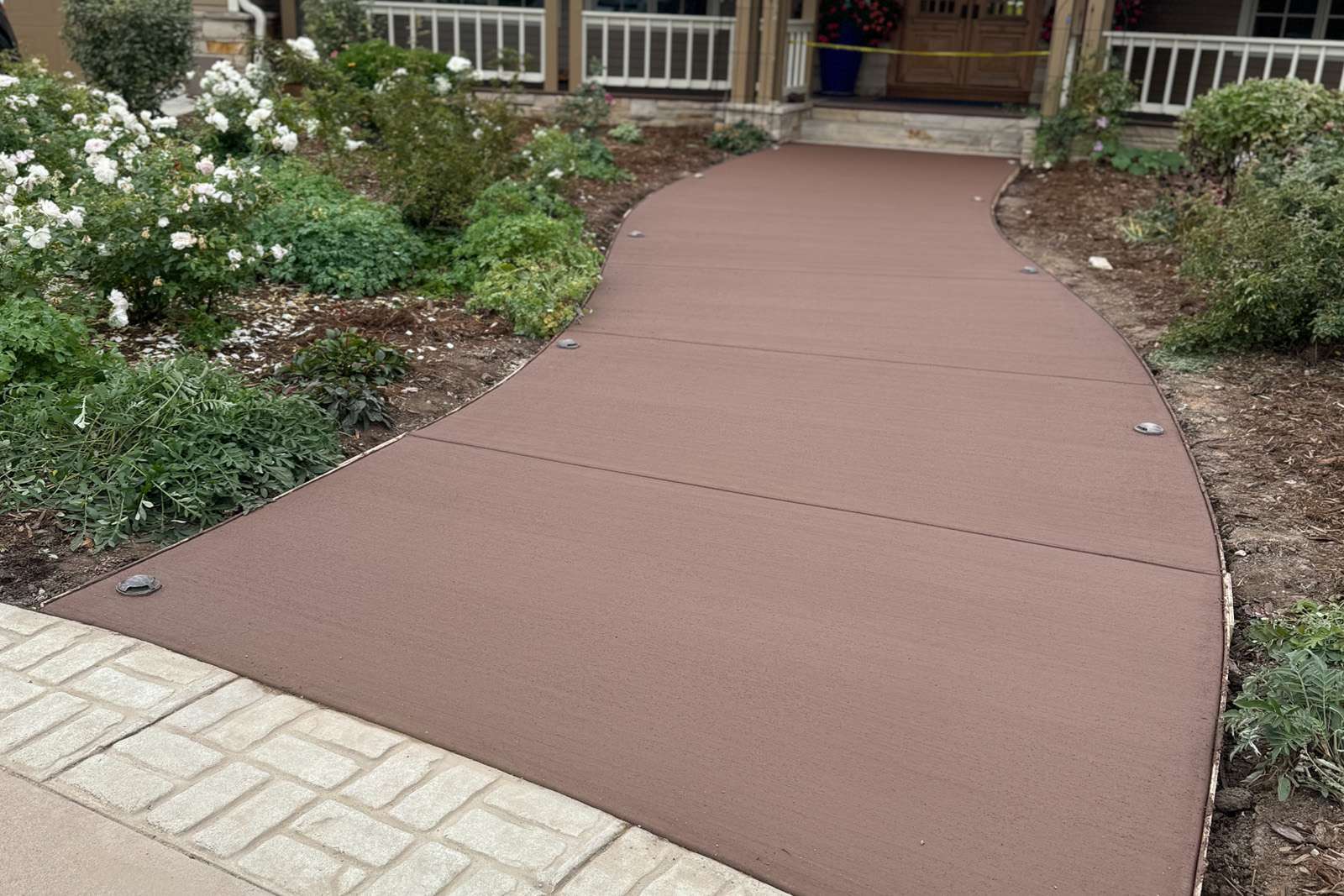
Concrete Driveways & Sidewalks
Other areas we serve
Loveland is one of the three towns we cover in depth, alongside Fort Collins, where we are based, and Greeley. Altogether the service area reaches twenty communities: Fort Collins, Laporte, Wellington, Timnath, Windsor, Loveland, Berthoud, Greeley, Evans, Johnstown, Milliken, Mead, Longmont, Frederick, Erie, Boulder, Broomfield, Thornton, Brighton, and Commerce City.
Wherever you sit on that list, the visit and the estimate are free.
Frequently Asked Questions
Who is responsible for the sidewalk in front of my house in Loveland?
You are. Loveland Municipal Code Chapter 12.20 makes the property owner responsible for the curb, gutter and sidewalk adjacent to the property, which surprises most homeowners the first time they hear it. In practice it means that when a panel lifts or a curb settles far enough to hold water, sorting it out falls to you rather than to the City. The City does run a Cost Share program that may apply where the problem is a drainage or safety issue rather than a question of appearance.
What permit does concrete work need in Loveland?
A Minor Right-of-Way permit, which the City defines specifically as the permit covering concrete work such as driveway approaches and sidewalks. Anything else in the right of way needs a Major ROW permit. Applications are only accepted complete: the signed form, an approved certificate of liability insurance, a traffic control plan, and a CDOT State Highway Utility or Special Use Permit where one applies. They go through Public Works Transportation Engineering at 2525 W. 1st Street.
Will new concrete tie into my existing driveway without opening up at the joint?
It will if it is pinned properly, and that is a real construction detail rather than a turn of phrase. Where new concrete meets old, pins or dowels carry load across the joint so the two slabs move together instead of independently. Leaving that out is one of the more common reasons a line opens along the seam within a winter or two. Ask whoever is bidding how they intend to make the connection.
My driveway sends water toward the house. Can that be sorted out during a replacement?
Yes, and it is the right moment to do it. Replacing a slab is the one point in its life when the grade is genuinely open to change, and with roughly 47 inches of snow in an average Loveland year, where meltwater leaves the driveway matters a great deal. If the existing fall runs toward the foundation, we will tell you and set the replacement up to carry water away instead. Solving it during the pour costs a fraction of living with it afterwards.
Our house in Centerra is newer and the concrete looks fine. Is there anything worth doing?
Usually the answer is a bigger slab rather than a new one. Centerra is post-2000 housing, so the flatwork is generally sound and still has years in it. What tends to be undersized is the patio, because builders put in the minimum the plan allowed and the lot will carry more. Extending the existing patio, adding a walkway, or moving to a stamped or colored finish gets more out of the yard without replacing concrete that is still doing its job.